Progressive judaism
Progressive Judaism—also known as Reform Judaism or Liberal Judaism—is, along with Conservative and Orthodox Judaism, one of the three main branches of the Jewish tradition. Its fundamental pillar is the effort to connect the ancient Jewish tradition with life in the modern world, which is constantly changing and evolving.
A progressive understanding of tradition had been firmly rooted in Rabbinic Judaism since its formation following the destruction of the Second Temple in Jerusalem in 70 CE. Progressive Judaism did not become a distinct movement until the 18th and 19th centuries in Germany, in connection with the Jewish Enlightenment known as the Haskalah, whose intellectual founder was the German Jewish scholar and philosopher Moses Mendelssohn (1728–1786). The German rabbi and scholar Abraham Geiger (1819–1874) played a similar role in Progressive Judaism. Shortly after its emergence, Progressive Judaism began to spread beyond Germany’s borders, including into the Czech lands. One of the first Czech liberal rabbis was Isaac Mayer Wise (1819–1900), originally named Weis, who came from the village of Lomnička in the Cheb district. Although he spent most of his life in the United States, where he founded the Union of American Hebrew Congregations (UAHC) and, two years later, the Hebrew Union College rabbinical seminary—which became the oldest institution of its kind in the United States—he always proudly acknowledged his Czech roots.
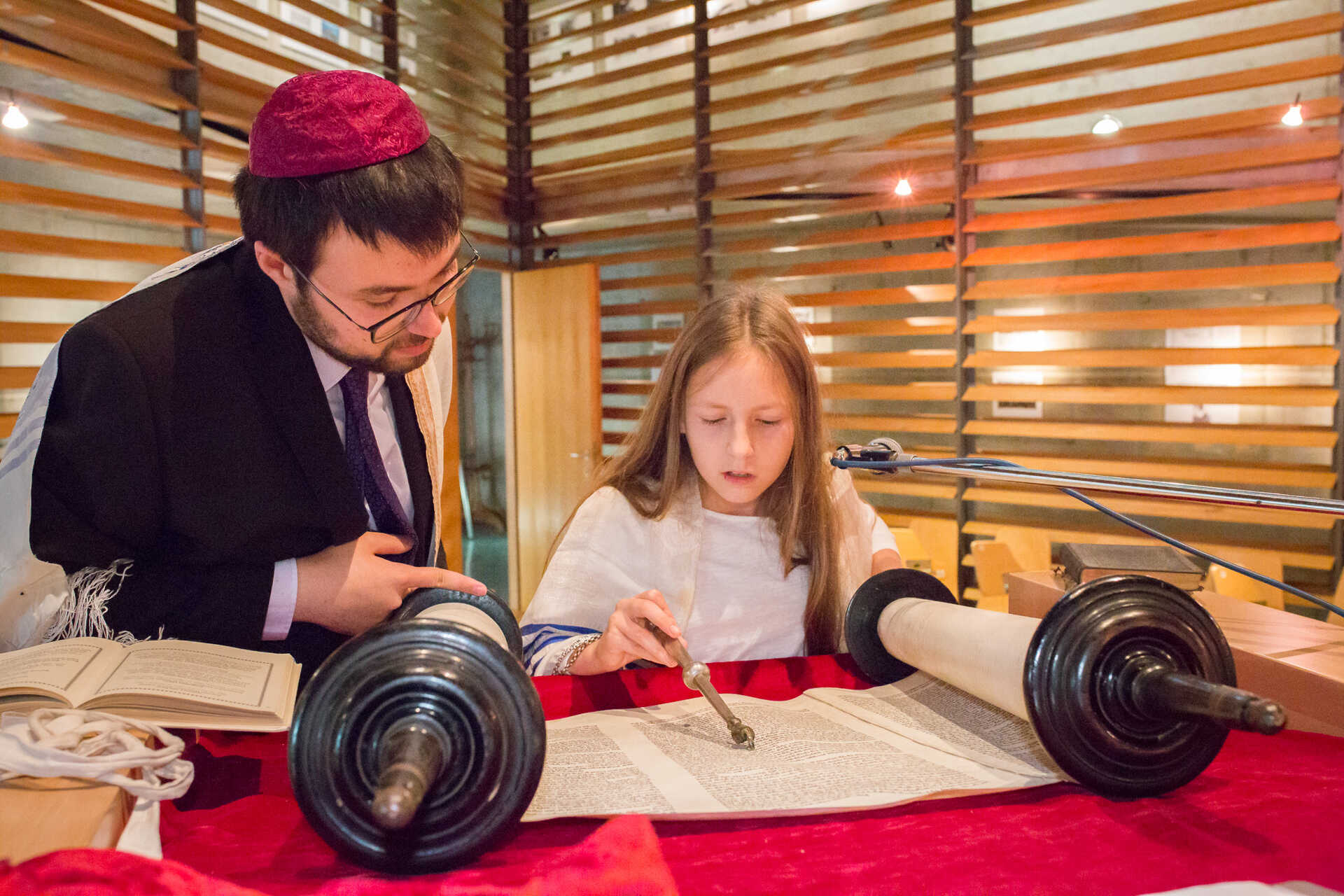
Progressive Judaism responds to the experience of the modern world by expressing a willingness to make reasonable reforms to tradition in light of the demands of the modern era. This is reflected, for example, in the full equality of women and men in religious matters. In Progressive synagogues, families are brought together by sitting together in the synagogue regardless of gender, and just like boys, girls are called up to the Torah upon reaching religious maturity.
Openness toward patrilineal Jews—whose Jewish identity is not denied and who are supported on their path toward full recognition of their Jewish status—also plays an important role. Progressive Jewish communities also strive to integrate their members’ non-Jewish partners into community life. Progressive Judaism emphasizes societal engagement in dialogue with people of various religious and cultural backgrounds, as well as social engagement in promoting ethical values, which includes, for example, helping the socially disadvantaged or working to protect the environment.
The Progressive understanding of Jewish tradition is the most widespread on a global scale. The World Union for Progressive Judaism (WUPJ), which brings together Reform, liberal, and Reconstructionist Jewish communities in more than 50 countries, including the Czech Republic, is supported by approximately 1.2 million Jews from more than 1,200 Jewish congregations, making it the largest existing Jewish organization in the world. In the Czech Republic, five Jewish communities currently identify as Progressive Jewish, four of which are members of the European Union for Progressive Judaism (EUPJ), a regional organization of the World Union for Progressive Judaism. Progressive Judaism has deep roots in the Czech Republic. The World Union of Progressive Judaism, mentioned above, was founded in London in 1926 by delegations from eight countries—France, India, Germany, Romania, the United Kingdom, the United States, Sweden, and, last but not least, Czechoslovakia.